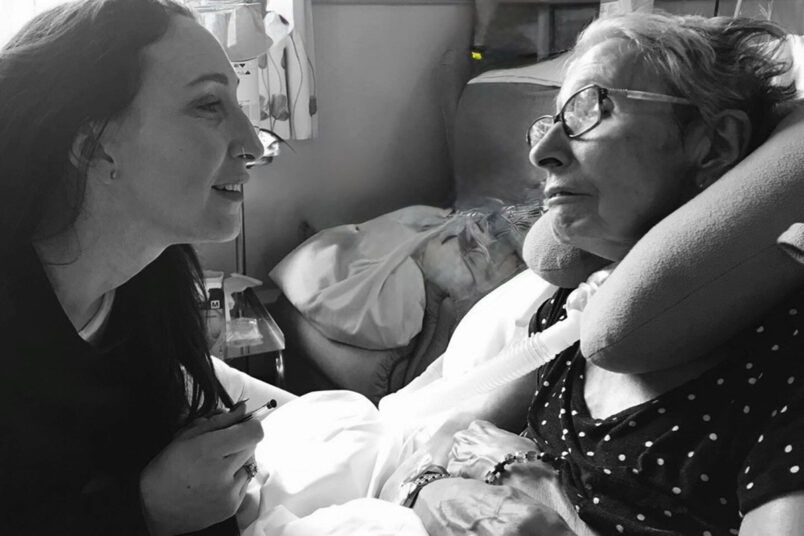
Rethinking palliative care: finding honesty in difficult conversations
Palliative care has been at the forefront of discussions in both Parliament and in the media, as the Terminally Ill Adults Bill progresses alongside important discussions about how people can better access palliative care. These debates raise important questions about how well we support people at the end of life, and whether our palliative care systems are receiving the resources they need.
Dr Rachel Clarke recently discussed in the Guardian the underfunding of palliative care and that dying people suffer more pain, more indignity, less choice and less autonomy than they might have if they were better able to access palliative care.
I agree that palliative care is underfunded and can be a postcode lottery for some, and this is exactly what the 10 Year Health Plan is looking to address through a new Modern service Framework for Palliative and end of life care. However, I’ve spent decades as a clinical specialist nurse in palliative care across both hospital and community settings. I am deeply proud of this work – it is skilled, compassionate, and profoundly human. Yet I also know, with complete certainty, that even the very best palliative care has limits. While nobody in the sector could deny that fact, in my experience it is not widely acknowledged. Naming those limits is not about blame or failure. It is about honesty, and this honesty is crucial so that we don’t inadvertently create an expectation that palliative care will always guarantee people a ‘good death’.
The complex reality of dying
Every journey toward death is unique. Yes, we can plan, anticipate likely problems, prepare the patient and families – this is the basis of good nursing care. But death is rarely predictable or straightforward. Alongside the physical symptoms come layers of emotional, spiritual, relational, and other social concerns. These elements weave together in ways that can’t always be controlled.
Even with the best planning, as palliative care professionals, we are often in a position of responding rather than preventing. Take anticipatory medication, for example. Prescribing medications in advance is designed to avoid distressing situations. But in practice, when symptoms arise, there are unavoidable delays: nurses may take time to arrive, initial doses may not be sufficient, patients and families may endure hours – sometimes days – of repeated visits before symptoms are brought under some level of control. Even with a syringe driver in place, comfort is not always guaranteed.
These are not necessarily failures or indicators of a substandard service, it is the reality of palliative care: we are often chasing symptoms, reacting in real time. We provide as much comfort as possible, but we cannot remove every difficulty.
What we call a ‘good death’
We often speak about a ‘good death’ as one where the final hours are calm and peaceful. And often, they are. But what we sometimes gloss over is the distress that may precede those final hours – the pain, breathlessness, anxiety, or confusion that families witness and patients endure.
Over time, we in palliative care have almost normalised this process, reassuring ourselves that if the final hours are peaceful, then we have achieved a ‘good death’. But for those living through those days or weeks, the journey can be much harder.
And while popular narratives often describe death as someone gently slipping away in their sleep, in all my years I have seen that version only a handful of times. That truth doesn’t take away from the value of palliative care – it highlights why we must be transparent about what it can and cannot achieve.
Why honesty matters
This isn’t about discouraging trust in palliative care – it is vital work, and I remain passionate about it. Patients and families deserve to know that while we will always strive for comfort and dignity, suffering may still occur along the way.
As the conversation around palliative care and its funding continue, we need to acknowledge its extraordinary value and its limits. Only then can people make informed, compassionate choices about what matters most to them at the end of life.
A personal reflection
When I think back over my decade at the bedside, I carry with me the stories of patients and families who let me into their most vulnerable moments. I remember the relief when symptoms were eased, the gratitude in a quiet “thank you”, but also the anguish when comfort felt just out of reach. These experiences shaped me – not into someone who doubts the worth of palliative care, but into someone who knows its boundaries.
To care at the end of life is to sit with questions that have no easy answers:
- How much comfort is enough?
- How much presence can one human give another?
Palliative care doesn’t shield us from these questions – it demands we face them. The ultimate challenge it leaves us with is simple, yet profound: can we confront the limits of life and care with honesty, and in doing so, find dignity not just in death, but in the days we still have.